Choosing a Cookware set is not only about how it looks in the kitchen. The right set should match your cooking style, heat source, durability expectations, and cleaning habits. It should also fit storage space, serve-size needs, and the level of temperature control you want for daily cooking. A thoughtful selection process helps you avoid common frustrations such as uneven heating, warping, stubborn stains, loose handles, or lids that do not seal well.
This guide breaks down the key factors that determine real-world performance and long-term value. For set options and configurations, you can browse WELLWAY’s cookware set range.
Many buyers start by comparing materials first, but the fastest way to choose correctly is to define how the cookware will be used. A set that performs well for searing and reduction sauces may be different from a set optimized for fast weeknight stir-fry or gentle simmering.
Start with these practical questions:
What dishes do you cook most often: boiling, sautéing, searing, braising, shallow frying, slow simmering
How many people do you cook for on typical days
How often you use high heat, and whether you need stable heat retention
Whether you prefer low-oil cooking, and how important easy release is
How much storage space you have for pots, pans, and lids
Whether dishwasher cleaning is required for your workflow
Once you define the use cases, you can map them to the pieces you actually need. Many sets include items that look useful but stay unused. The goal is coverage of your daily tasks with minimal redundancy.
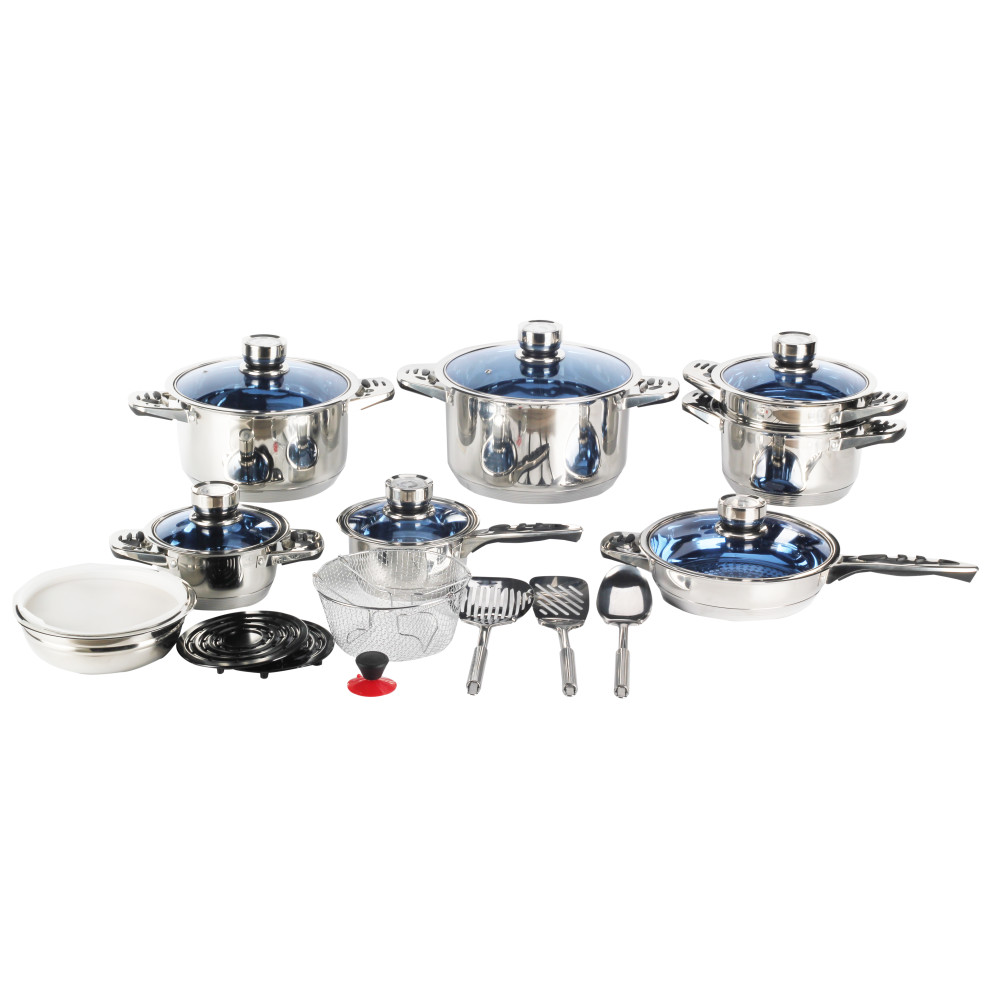
A balanced everyday set usually includes:
Saucepan for reheating and small-batch simmering
Medium pot for soups and pasta
Large pot for family meals and batch cooking
Fry pan for eggs, sautéing, and shallow frying
Deep pan or sauté pan for one-pan meals and braising
Tight-fitting lids for moisture control and energy efficiency
Cookware performance is driven by two things: material properties and construction quality. Material determines heat behavior, while construction determines how consistently that heat is delivered across the cooking surface.
Common cookware materials and what they mean in practice:
stainless steel
Strong, corrosion-resistant, and suitable for high heat. Best for searing and sauce work when the pan heats evenly. Construction quality matters a lot because thin stainless can develop hot spots.
Aluminum
Heats quickly and responds fast to temperature changes. Often used as the core layer in multi-layer cookware. Bare aluminum is not always ideal for acidic foods, so surface treatment is important.
Cast iron
Excellent heat retention, strong searing ability, and good for long cooking. Heavier and slower to heat, requires care to prevent rust if not coated.
Carbon steel
Strong searing and fast heating, can develop a natural seasoning over time. Requires maintenance similar to cast iron.
Construction terms that affect real performance:
Multi-layer construction
Layers help spread heat evenly. More important than brand names is how well the layers are bonded and how consistently heat is distributed.
Thick base design
A thicker base can help reduce warping and improve heat stability, especially on high-output burners.
Full-body heat spread
For saucepans and stockpots, heat distribution up the sidewalls can matter for sauces and stews.
What to inspect or confirm when reviewing a set:
Flatness of the base and resistance to warping
Smoothness of interior surface for easier cleaning and lower sticking
Handle attachment quality and heat-resistant design
Lid fit, steam control design, and durability of knobs
Rim design for drip-free pouring and cleaner stovetop use
Different heat sources deliver heat in different ways. A cookware set should be compatible with your main cooking equipment and support consistent temperature control.
Key compatibility points:
Gas
Works with most materials. Flame control is flexible, but uneven flame patterns can cause hot spots if cookware is thin.
Electric coil
Needs flat-bottom cookware for full contact. Warping can lead to unstable heating and longer cook times.
Ceramic glass
Requires smooth, flat bases to avoid scratching and to maintain contact. Heavy sliding can damage the surface.
Induction
Requires magnetic compatibility. Many stainless steel sets work well if the base is designed for induction. Construction and base flatness strongly influence performance.
If you are purchasing for multiple regions or mixed kitchen setups, selecting a set designed for broad compatibility reduces returns and simplifies product planning.
A cookware set should match your storage, stove size, and the portion sizes you cook most often. Oversized pots can be difficult to store and can take longer to heat, while undersized pans lead to spillovers and uneven browning.
Use this sizing checklist:
Fry pan diameter should fit your largest burner and your typical portion size
Pot capacity should match your soup or pasta volume without boiling over
A deeper pan is useful for sautéing with less splatter and for one-pan meals
Lid count should match the pieces you use most frequently
Common selection mistakes:
Buying too many small pans and not enough medium workhorse pieces
Choosing a set with lids that do not fit tightly, causing moisture loss and longer cooking
Ignoring handle comfort, especially for heavier pans and full stockpots
Picking pieces that do not nest or store efficiently, leading to daily inconvenience
Cookware set selection guide:
| Cooking Priority | Best Pieces To Prioritize | What To Look For | What To Avoid |
|---|---|---|---|
| Daily quick cooking | Medium fry pan, saucepan, medium pot | Fast heat response, easy cleanup | Too many specialty pieces |
| Searing and browning | Fry pan, sauté pan | Even heating, stable base | Thin bases that create hot spots |
| Soups and batch meals | Large pot, medium pot | Lid seal, stable sidewall heating | Warping, loose handles |
| One-pan meals | Deep sauté pan with lid | Depth, splash control, even heat | Shallow pans that spill easily |
| Low-oil cooking | Nonstick pan, controlled heat cookware | Consistent surface, stable temperature | Overheating and abrasive cleaning |
Coatings influence how food releases, how easy the pan is to clean, and how the cookware ages over time. Your selection should match your cooking habits, especially the temperatures you use and the utensils you prefer.
Nonstick considerations:
Best for low to medium heat and delicate foods
Requires softer utensils and gentle cleaning to preserve the surface
Not ideal for repeated high-heat searing if you want long-term coating stability
Stainless steel care considerations:
Can handle higher heat and is durable
Benefits from correct preheating and oil control to reduce sticking
Can be restored from stains and heat marks with proper cleaning routines
Lid and handle durability:
Handles should feel stable, with secure attachment
Lids should seat evenly and resist wobble
Heat resistance matters for knobs and grips during long cooking sessions
When evaluating value, consider total ownership cost:
How long the set stays flat and performs consistently
How easy it is to maintain appearance and cleanliness
Whether the set supports replacement parts, additional compatible pieces, or specification consistency
For buyers planning repeated supply, consistent specifications and reliable production control often matter as much as the initial price point.
WELLWAY focuses on cookware sets that can be configured to match different cooking styles and kitchen setups. Instead of forcing a one-size approach, the set structure can be adjusted by piece selection, size planning, and finish preferences so the final set fits real cooking tasks and storage constraints. If you need a specific combination of pans, matching lids, packaging requirements, or finish coordination, WELLWAY can support guidance and customization planning through the cookware set lineup.
To choose the right cookware set, start by defining how you cook, then match the set to your heat source, preferred material behavior, and daily routine. Focus on construction quality, practical piece selection, and lid and handle durability. A set that heats evenly, stays flat, and is easy to maintain will deliver better long-term value than one with more pieces but weaker performance.
If you are deciding between different set configurations or want help building a set that matches your kitchen usage and product requirements, contact WELLWAY. Share your target pieces, heat source, preferred material direction, and any customization goals, and we will provide guidance and tailored options based on our cookware set solutions.
Previous: Are Fry Pans Recyclable?